APFC / Power-Factor Panels
Automatic power-factor correction with detuned reactors to hold PF near unity and cut utility penalties.
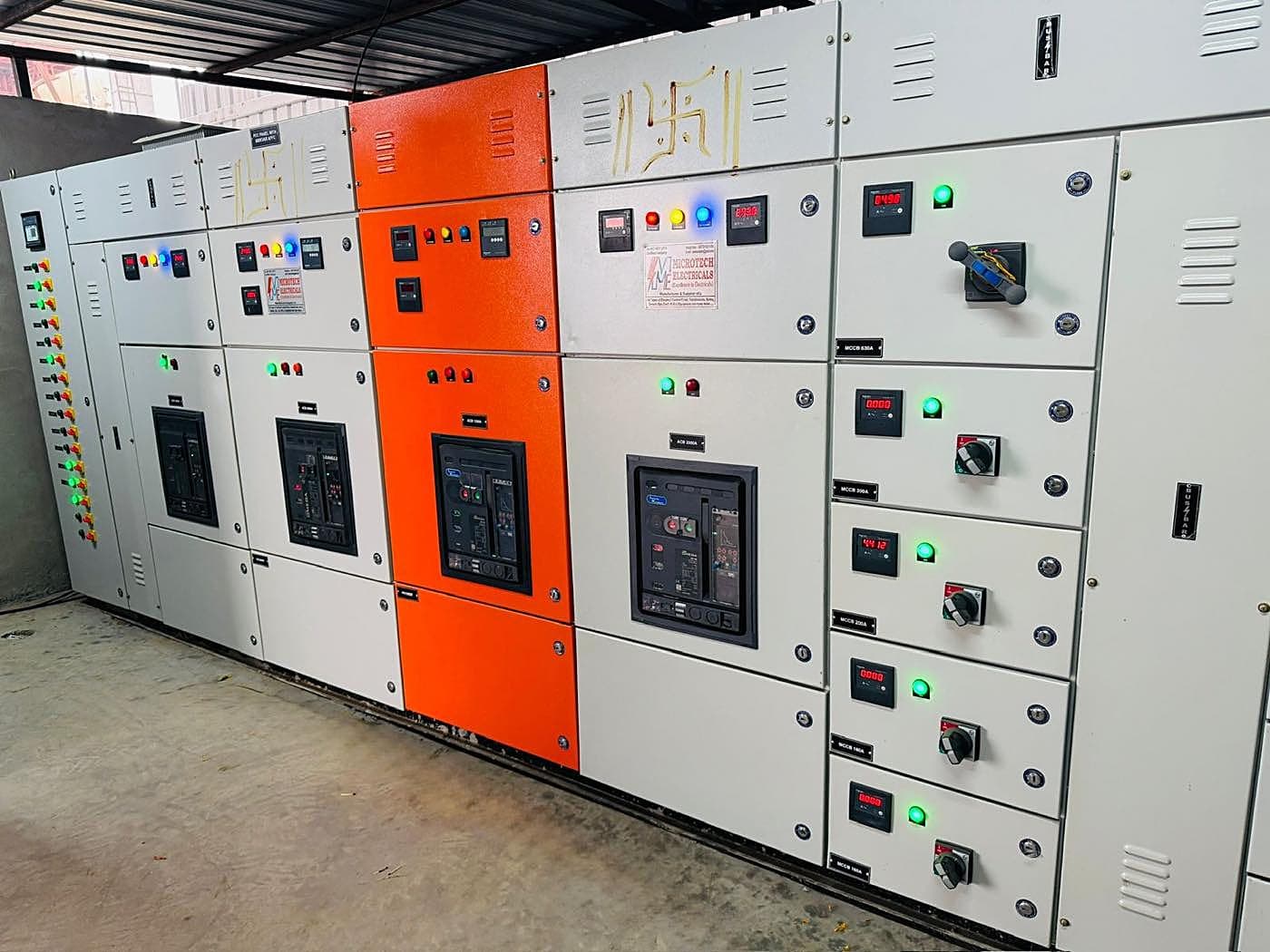
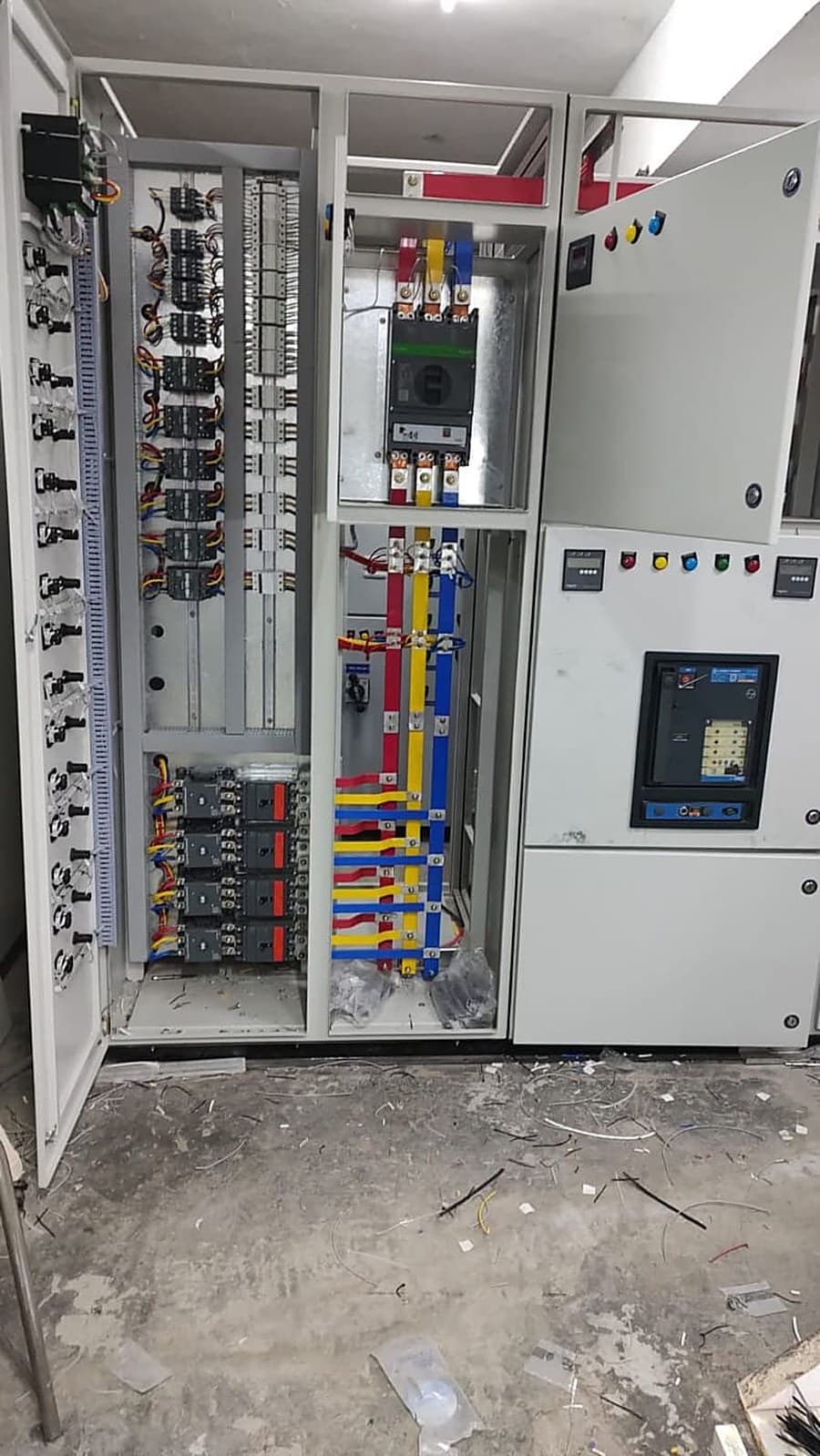
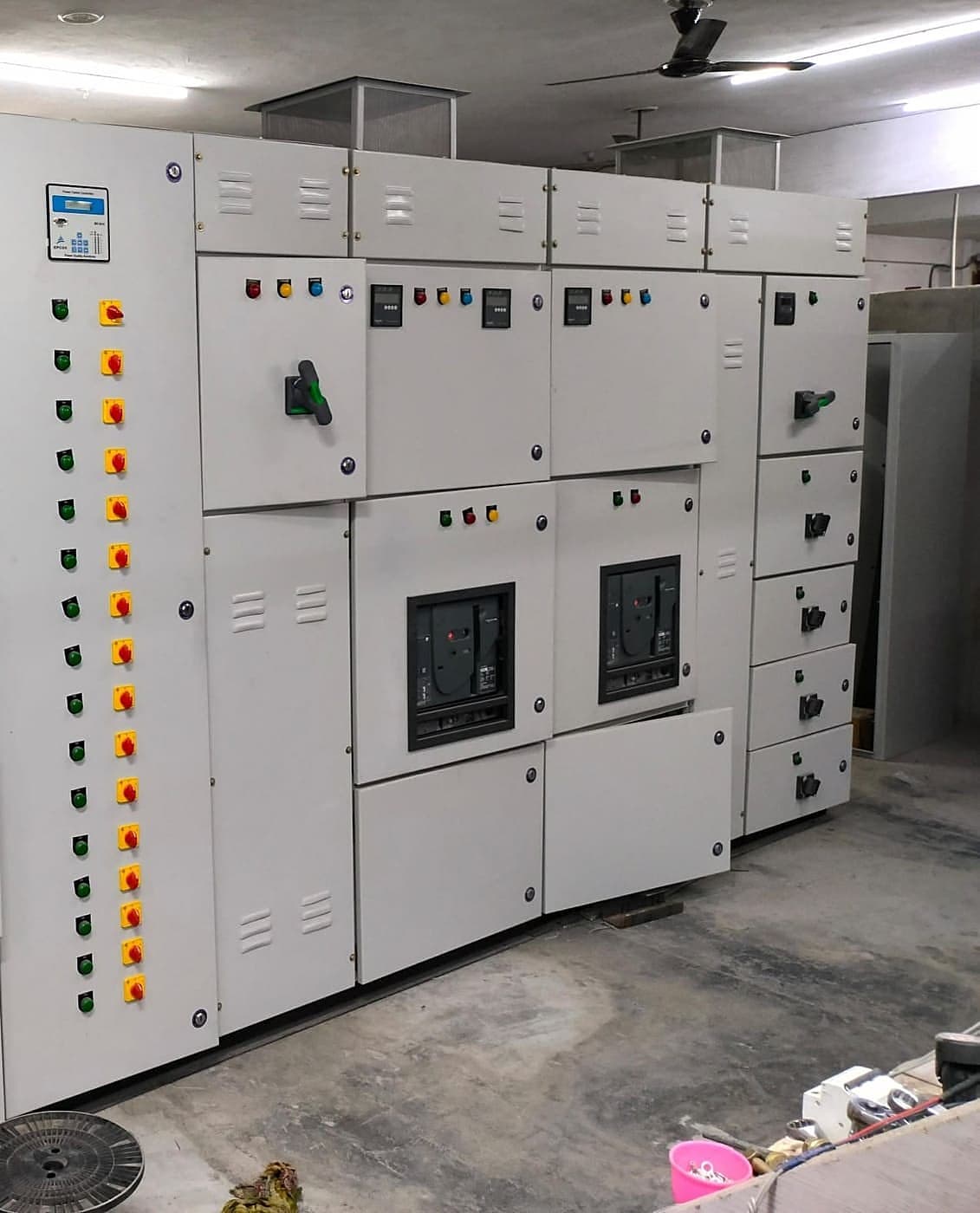
About APFC / Power-Factor Panels
An automatic power factor correction (APFC) panel keeps a site's power factor close to the target set by the electricity utility. A controller measures the load through current transformers and switches capacitor steps in and out as inductive load — motors, transformers, welding sets — rises and falls, so the supply draws less reactive current and the plant avoids low-PF penalties.
Microtech manufactures APFC panels at its Varanasi and Lucknow facilities using Lauritz & Knudsen and Schneider Electric components. Where drives, UPS or other non-linear loads create harmonics, we add detuned reactors in series with each capacitor step. The reactor shifts the step's resonance below the dominant harmonics, protecting the capacitors and preventing the bank from amplifying distortion.
Step sizes are worked out from your electricity bills, maximum demand and load pattern, with switching by capacitor-duty contactors or, for fast-changing loads, thyristor switching modules. Controllers such as the L&K etaULTRA measure each phase separately and log harmonics, which helps on unbalanced or DG-fed systems.
Key specifications
| Panel rating | 25 kVAr to 1000 kVAr |
|---|---|
| Correction type | Standard (non-detuned) or detuned with 7% or 14% reactors |
| Detuned tuning frequency (50 Hz) | About 189 Hz at 7%; about 134 Hz at 14% |
| Capacitors | Metallised-polypropylene LV power capacitors — L&K standard, heavy, super-heavy and ultra-heavy duty ranges, or Schneider Electric PFC capacitors |
| APFC controller | e.g. L&K etaULTRA: 3-CT phase-wise measurement, harmonics to the 31st order, Modbus RS-485, cascadable to 64 steps |
| Switching | Capacitor-duty contactors, or thyristor switching modules for dynamic loads |
| Mains / DG operation | Dual PF set-point for mains and DG supply on etaULTRA |
| Panel standard | IS/IEC 61439-1 & 61439-2 |
Features & benefits
- Steps sized from your bills and load profile rather than a fixed kVAr chart
- Detuned reactors where harmonics are present, to avoid resonance and capacitor failure
- Capacitor-duty contactors to limit switching inrush; thyristor switching for fast loads
- Phase-wise measurement for unbalanced loads with 3-CT controllers
- Harmonic readout and Modbus link for BMS or SCADA monitoring
- Forced ventilation and step fuses or MCCBs for capacitor protection
- Support for sites with solar generation through 4-quadrant controller operation
Where it’s used
- Industrial plants on HT or LT supply with PF-linked tariffs
- Textile, paper and sugar mills
- Commercial buildings, malls and hospitals
- Pumping stations and water treatment
- Sites with VFDs, UPS and other harmonic sources
- Solar-connected factories needing 4-quadrant correction
Standards & compliance
APFC / Power-Factor Panels — FAQs
How do I size an APFC panel for my plant?
The required kVAr comes from the present power factor, the target power factor and the maximum kW demand. We work it out from recent electricity bills and a note of the major loads, then split the total into steps small enough to track your load changes.
When do I need a detuned APFC panel?
If the site has significant non-linear load — VFDs, UPS, rectifiers, LED lighting or induction furnaces — plain capacitors can resonate with the supply and amplify harmonics. A detuned panel with 7% or 14% reactors avoids that. A harmonic measurement settles the choice; 14% is used where third-harmonic content is high.
Why does my existing APFC panel keep failing capacitors?
Common causes are harmonic overload, high panel temperature, over-voltage and switching without inrush-limiting contactors. We can check the harmonics and the panel condition, and recommend detuning, ventilation or contactor changes.
Can the panel work when the DG set is running?
Yes. Controllers such as the L&K etaULTRA hold a separate power factor set-point for DG operation, so the bank does not over-correct and push the generator into a leading power factor.