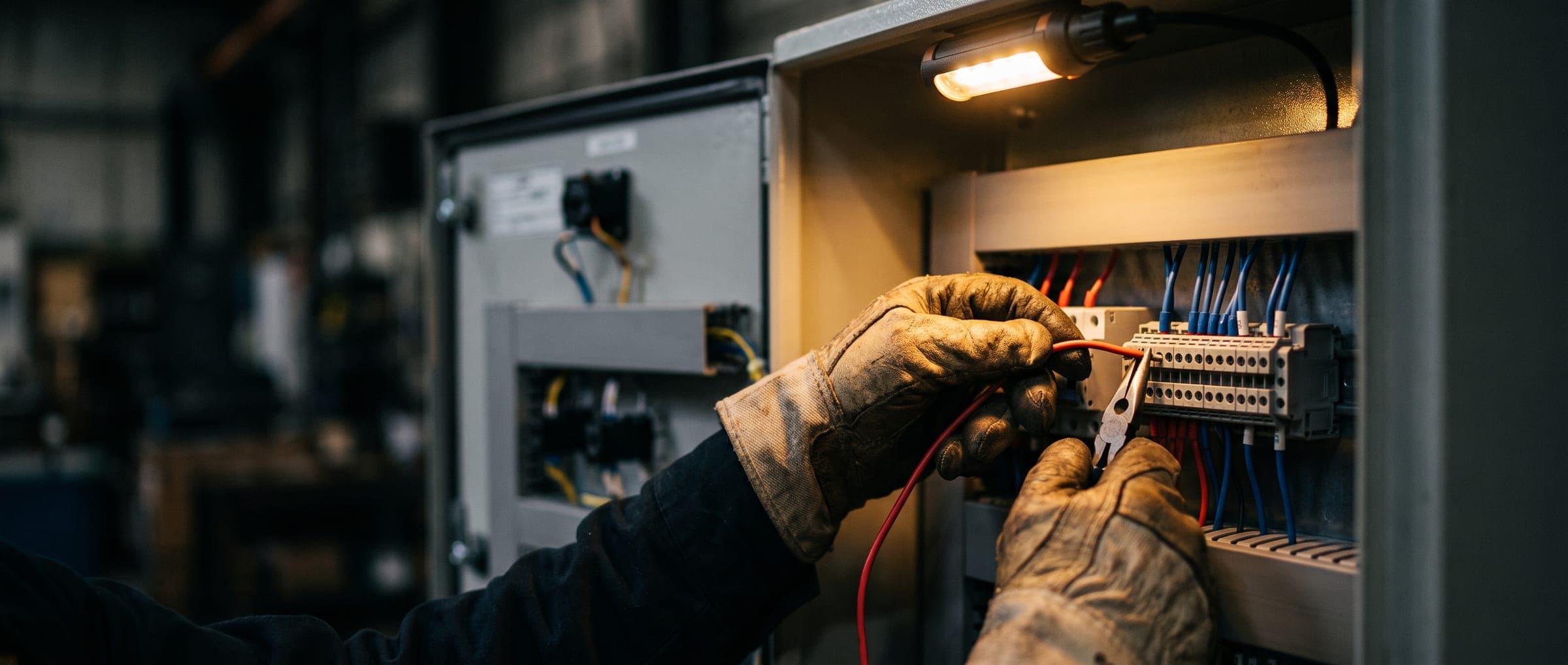
Temperature Controllers
Process temperature control instruments for accurate, repeatable thermal regulation.
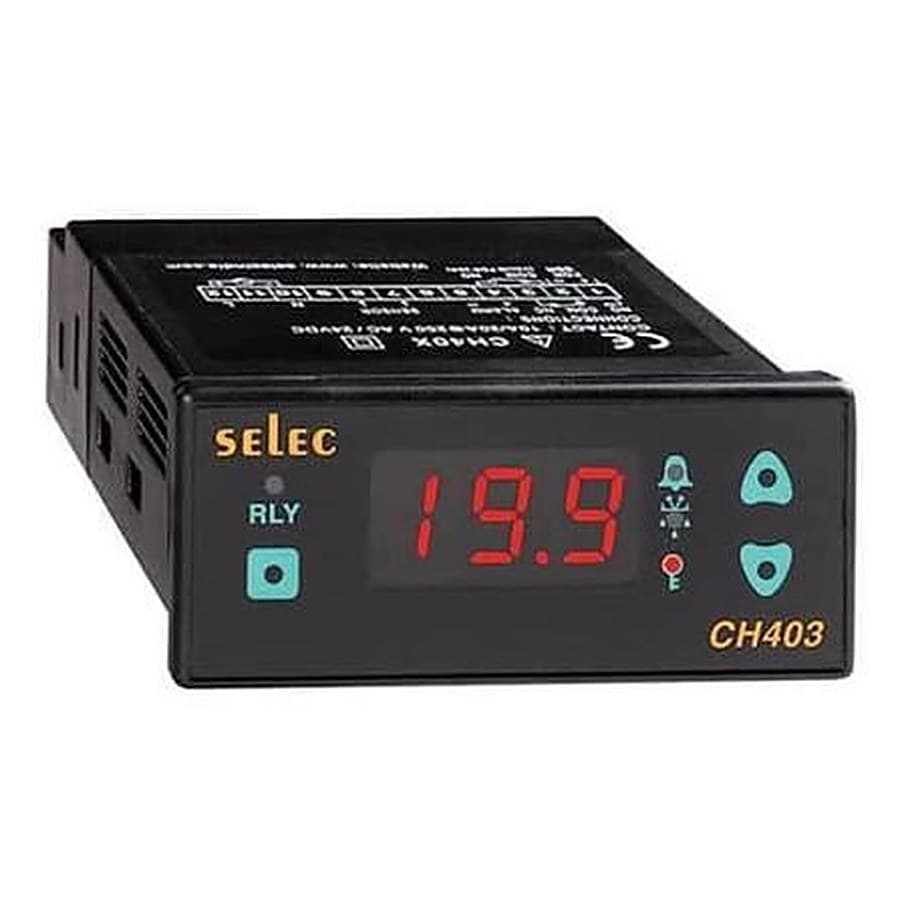
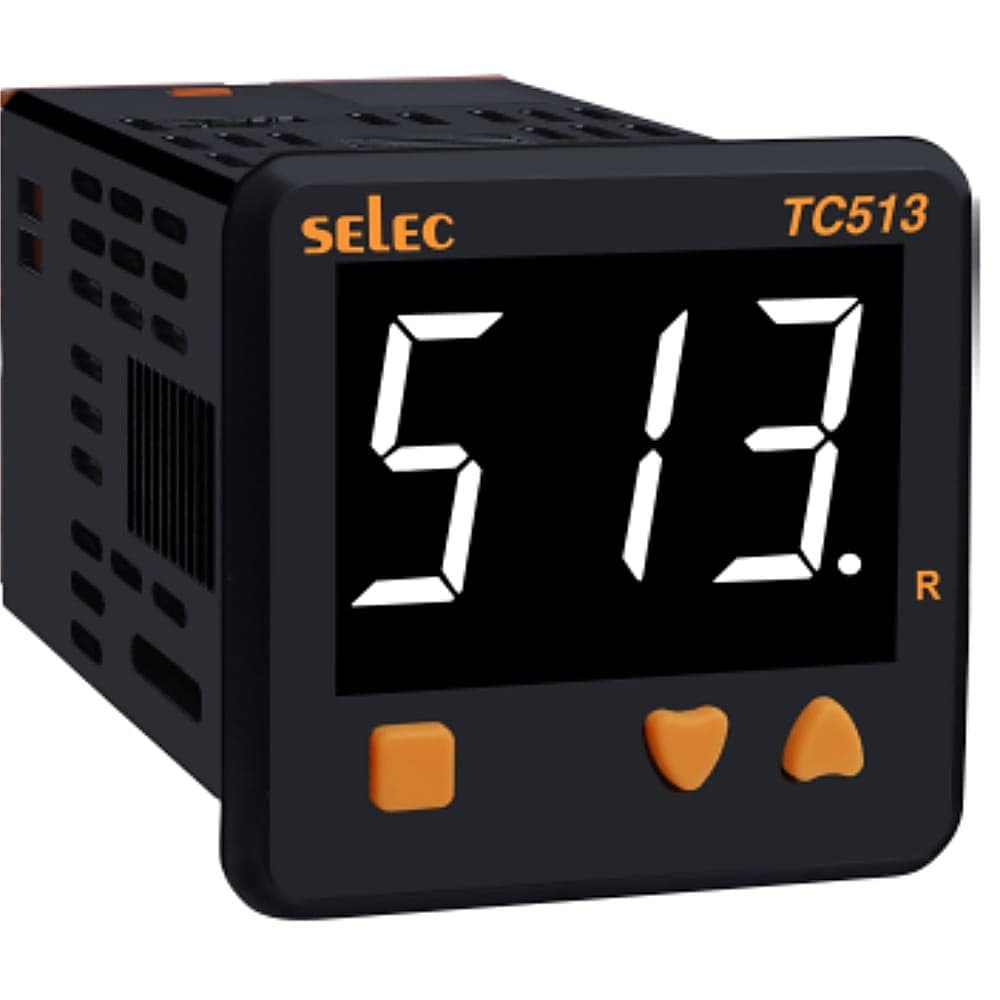
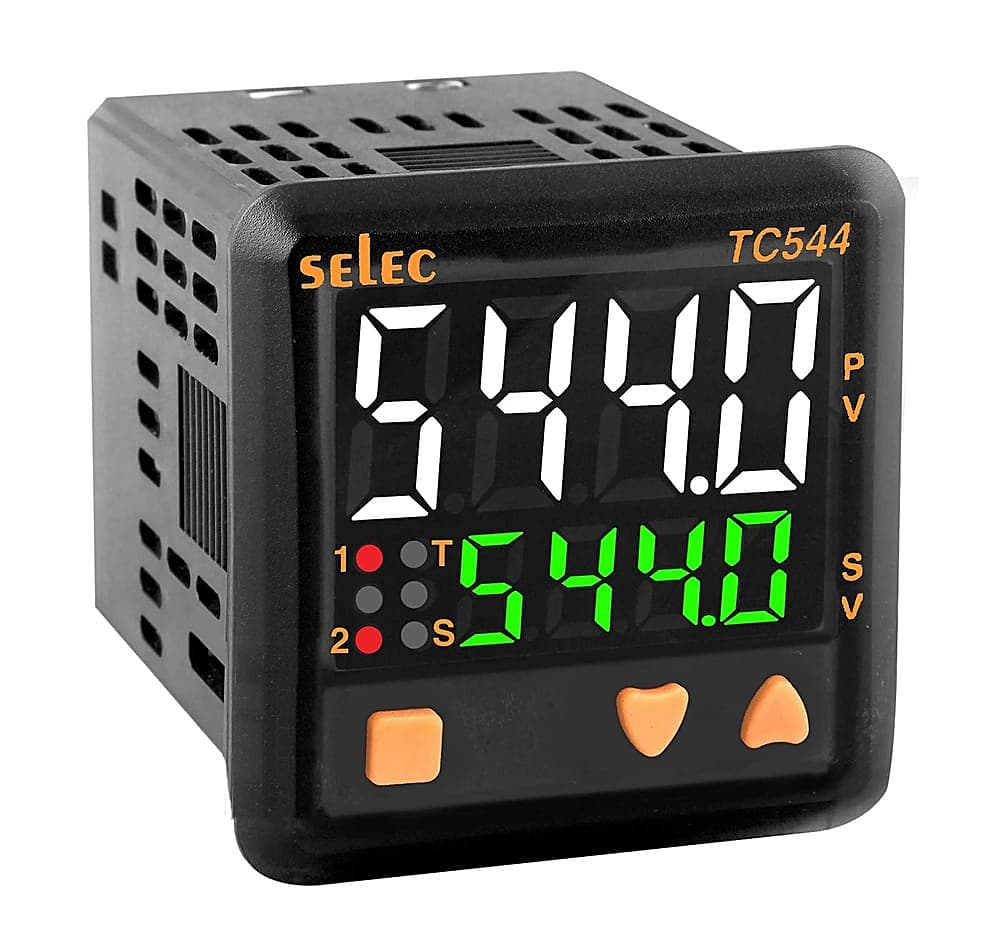
About Temperature Controllers
A temperature controller reads a sensor, compares the reading with the set point and switches a heater, contactor or SSR to close the gap. We supply Selec panel-mount controllers for ovens, moulding machines, dryers, heat-treatment furnaces and any other process that has to hold a temperature.
Simple loads that tolerate a small swing run well on on-off control. Where the process needs a steady value, PID control with auto-tune works out the gain settings itself during commissioning. Selec controllers accept J, K, T, R and S thermocouples and Pt100 RTDs, and selected models also take mA, voltage and mV signals.
As a temperature controller supplier working out of Varanasi and Lucknow, we match the cut-out size, sensor type and output type to your panel and load. That way a replacement drops straight into the existing cut-out, and a new panel goes in with the right SSR or contactor on the output.
Key specifications
| Brand / series | Selec — CX, BX and PID series |
|---|---|
| Panel sizes | 48×48, 72×72 and 96×96 mm (model-dependent) |
| Sensor inputs | Thermocouple J / K / T / R / S and Pt100 RTD; PID500 also takes mV, 0–10 V and 0–20 mA |
| Control modes | On-off, auto-tune PID; self-tune and heat-cool PID on TC544C |
| Control output | 5 A relay or SSR drive; PID500 adds 4–20 mA or 0–10 V options |
| Indication accuracy (TC544C) | 0.25% of FS ±1° for J/K/T; 0.5% of FS ±2° for R/S; 0.1% of FS ±1° for RTD |
| Supply voltage | 90–270 V AC/DC |
| Communication | RS485 Modbus (optional on PID500; standard on precision PID series) |
| Certification | CE on listed models; RoHS on selected variants |
Features & benefits
- Auto-tune PID sets the control terms without manual trial and error
- Dual display shows process value and set point together on most models
- Auxiliary relay output for alarms or a second set point
- Wide 90–270 V AC/DC supply suits unstable panel voltages
- Single-step ramp-soak and three set points on the PID500
- Short-depth housings for shallow control desks
Where it’s used
- Plastic injection and extrusion machines
- Industrial ovens and dryers
- Heat-treatment and annealing furnaces
- Food processing and packaging lines
- Hot-runner and sealing equipment
- Laboratory and test chambers
Temperature Controllers — FAQs
Should I choose PID or on-off control?
On-off control is fine for loads that can tolerate a small swing around the set point, such as simple heaters. Use PID when you need a steady temperature with minimal overshoot — moulding, sealing and furnaces usually fall in this group.
Thermocouple or RTD — which input do I need?
Pt100 RTDs give better accuracy at low and medium temperatures. Thermocouples cover higher temperatures; J and K types are common, while R and S types are used in very hot furnaces. Tell us the sensor already fitted and we will match the controller input to it.
When should I use an SSR output instead of a relay?
Choose an SSR drive output when the heater switches often under PID control. A solid-state relay has no contacts to wear out. A relay output suits slower cycling or loads switched through a contactor.
Can a temperature controller connect to our PLC or SCADA?
Yes, on models with RS485 Modbus, such as the PID500 (optional) and Selec's precision PID series. We can confirm the right model and wire the communication loop during commissioning.